Yeah, I'm going to do more blogs about old dinosaur art and other things. Because I have watched the five (only five!?!) hand-drawn animated features by Dreamworks. And, well...
First off, I made the mistake of watching three of them in one night. My dreams -those awful way-too-vivid dreams that leave you more exhausted than you were before you fell asleep - were a blur of weird character designs, pop-composer songs, and random celebrity voices.
I feel as though the Dreamworks "Tradigitals" (their term) are not nearly as interesting as the story behind them. This old, old, old Entertainment Weekly article describes the world in which Dreamworks animation was formed quite well. It's The Land Before Pixar, really, and Jeffry Katzenberg is ready to show up his old bosses at Disney by making the most EPIC animated feature film ever made.
That would be "The Prince of Egypt", and all things considered, it's the only one of these movies that's worth a damn. OK, that sounds mean. It really is every bit as awesome as Katzenberg wanted it to be. There are some moments in it that are among the best pieces of animation ever created. It stayed with me for a long time after viewing and is one of my favorite religious films.
Even so, it suffers from the one problem that brings down each of these movies: They tried way too hard to make this film, "Everything that we assume people loved in 'The Lion King' -- but MORE." And that means more random and distracting celebrity voices, more big damn epic ballads (this movie's Obligatory Disney-Style Oscar-Baiting End-Credits Ballad has Witney Huston and Mariah Carey, which was a huge deal back then), more musical numbers, more action scenes, more big special effects showpieces, and more people falling off of high places. (And it is worth noting here that for the longest time, the Dreamworks/PDI animated films were "Everything that we assume people loved in 'Shrek' -- but MORE." If I ever get around to making my list of "Movies That Are Good But Have A LOT To Answer For", "Shrek" would be almost guaranteed to be at the top of that list.)
Even with these flaws, "Prince of Egypt" is very, very good. It is well worth a revisit if you haven't seen it in a while. The same cannot be said for "Joseph: King Of Dreams"; probably meant to be a follow-up film and dropped onto the direct-to-home-video market instead. It's instantly forgettable aside from the very bizarre casting of Ben Affleck as Joseph.
"The Road to ElDorado" starts out fun. And then it feels more and more like a cute little box stuffed with everything the directors ever pitched during the production. By the end, it just wound up being confusing and annoying. It also shows how quickly something that appears to be a can't-miss premise a few years ago ("Timon and Pumbaa stole the show during 'The Lion King', so why don't we just cut out the boring lead characters and make the cute funny sidekicks the main characters?") can come across as weird and dated.
And that brings us to the movie I dreaded having to watch again for the purpose of this project: "Spirit: Stallion of the Cimarron". I went ahead and wrote a long review of this beautiful disaster over at The Realm of Madness. Even so, I will sum "Spirit" up with the following macro:
Lastly, we have "Sinbad: Legend of the Seven Seas". It has some fun action scenes. The designs of the monsters are awesome and very creative. I want to say they are by Nicholas Marlet, based upon the sketches that can be viewed in the DVD special features. And there is some fantastic effects animation whenever Eris shows up. And it is otherwise boring as hell, coming across more like a half-hearted "Pirates of the Carribean" cash-in than a movie the studio had real faith in.
So it's hard to decide exactly what to say about Dreamworks' traditionally animated films. I guess I'm glad I watched them all just to say I did.
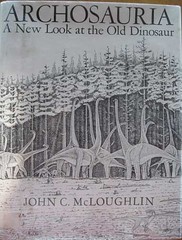
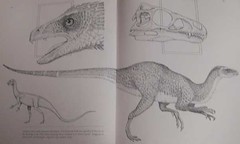
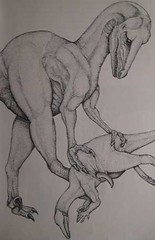
John C. McLoughlin's Archosauria was published in 1979 by the Viking Press and was, let's be fair here, RIDICULOUSLY ahead of it's time. He includes some fine pointillism illustrations. He is also one of the first people to depict most of his small theropods with fluffy feathers:
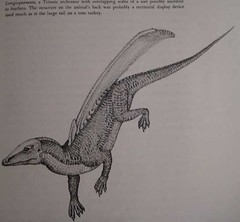
These Coelurus drawings are my favorites in the book. The detail is lovely. I like the hawklike facial study in the upper-left corner (though I'm not sure how accurate it is given modern evidence). And I especially like how McLoughlin includes a copy of an old illustration of each animal, as he does in the lower-left here. McLoughlin briefly covers other members of the Archosaur... group...? (Someday I will post my Rant Against Linnaeus' Classification System.) One of these is little Longisquama (here, called Longisquamata):
Here McLoughlin gives us one of the reasons why his book is notorious: he is perhaps best known for having some... interesting ideas about prehistoric animal anatomy and behavior. Longisquama, according to McLoughlin, had only one set of those... things on his back. And he used them to trap warm air pockets for insulation. And they are, without doubt, the predecessors of feathers. I almost hate to say that it's apparently just as likely that those things on his back are leaves that coincidentally preserved along with the one known specimen of Longisquama in a suggestive position... - Rumor Debunked! See Jan's awesome comment below. (Quick version: Longisquama actually did look like this.) It's also very strange that Coelurus, Longisquama, Saltopus, and other animals of that ilk all sport a fine coat of feathers - and Deinonychus doesn't. In fact, McLoughlin's Deinonychus is just weird all around:
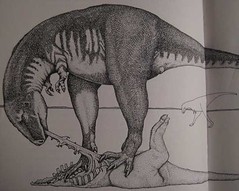
Something tells me that this wouldn't work... Now, to be fair, there weren't many complete fossils of dromeosaurs back in 1979. There weren't many good complete fossils of tyrannosaurs either, which goes a way in explaining Sharkface McDerpasaurus rex here:
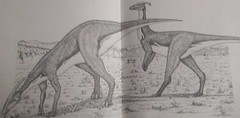
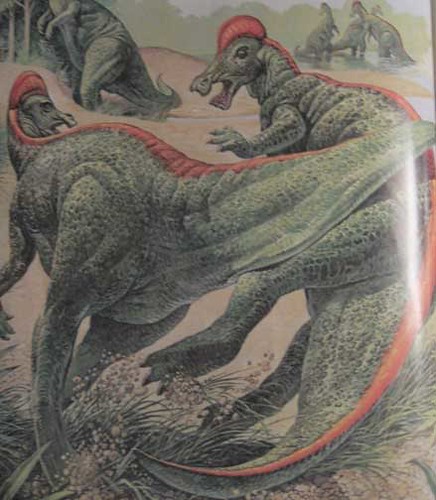
Uh... yeah. Old dinosaur books, as we have seen, depict all hadrosaurs as swimming swamp-dwellers. McLoughlin instead depicts them, more accurately, as upland animals more akin to a really big cow than a really big duck. That said, take a look at his Parasaurolophus couple:
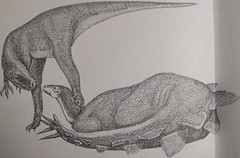
It's good that they're not up to their balls in a swamp, but this might be too far in the opposite direction, and we all know we ought to avoid that. :) Next is one of the most unintentionally hilarious drawings in the book:
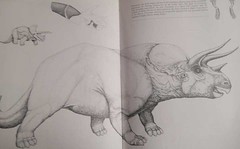
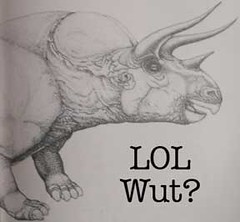
I am in love with this drawing. You can't not love an animal that defends himself by lying down. Good jarb, Spike! You just exposed your tasty flank! Now, if you are reading this and you've already heard of John McLoughlin, then you know what I've saved for last. If this is the first time you've heard of him, boy are you in for a treat. I said, and showed, that McLoughlin had some VERY unusual theories on dinosaur anatomy. None of them are as mind-bending as what follows. Ladies and gentlemen, John McLoughlin's reconstruction of Triceratops:
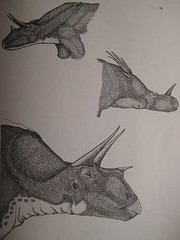
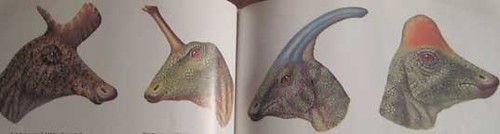
Take a minute or two. Let it allllll sink in. OK? Well, here are some other ceratopsians:
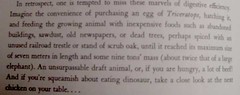
I do enjoy this paragraph that ends the Ceratopsian chapter, just because it's such a great mental image (click for big):
More, and better, has been written about this theory at good old Tetrapod Zoology. It's not really surprising that this has since been debunked (essentially for just plain not working). That poor Styracosaur looks to be in pain.
Now while we're on the subject of people with weird ideas about prehistoric animals, I wonder if DavidPeters has ever written a book...
As I mentioned before,Model a Monster, which is otherwise an innocuous and adorable book of arts and crafts projects centered mostly around dinosaurs, has an ending that is unexpectedly weird. Really weird. Like, "where did I read that creepy thing as a child that still haunts my mind well into adulthood?" weird. That kind of weird. It starts around page 150, where we are told how to "Make a monster diary". We're going to take an ordinary diary and imagine that each "day" is about eleven million years in the history of planet Earth. By this reckoning, human history starts around 6:15 PM on December 31. World War Two ended a third of a second before New Year's Day. I always found activities like this to be like a real life Total Perspective Vortex. And then, we get to play The Extinction Game. Yay...?
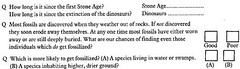
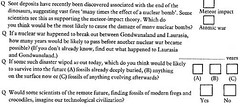
I know it probably would have been easier to retype the questions, but I'm going to be using scans instead (click for the larger images). Because otherwise, I don't think you'd believe me at all when I try to tell you that what you are about to read is the ending of a book for children about making hand-made dinosaur models and toys. The instructions to The Extinction Game tell the little kids reading this to "find the answers to these questions". They can ask a teacher, librarian, or other adult for help in answering them. This is going to be sad/hilarious later. There are about two-dozen questions in The Extinction Game. Some of them have answers that are pretty easy to find:
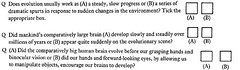
Some of them... well, I don't know if there are straightforward answers for these, or if there ever will be:
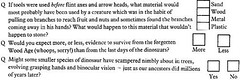
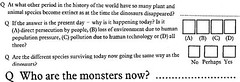
So far so good. But the next batch of questions takes an unexpected turn, and the implications here are pretty weird:
This brings us to the next batch of questions, which... jeez, have fun fielding these ones teachers and librarians:
OK, this book was made in England during the Cold War (if you're under twenty, go download the "Songs from the Big Chair" album if you don't understand the mindset at work here; but download it anyway because it is awesome). Still, WTF?! And then, it gets worse:
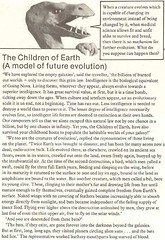
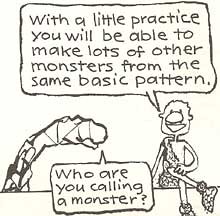
Lest you think this is as weird and dark as Model a Monster gets, it is time for a little story! This is what was chosen to be on the very last page of the book. Enjoy. I'm sure all the little kids who just wanted a book about making model dinosaurs did:
We need something to laugh at after all those vast, galloping herds of Nightmare Fuel. So next, I'll review a notoriously strange dinosaur book from way back in 1979 by a fellow New Englander. What could it be???
----
Art of the day! Consider this a teaser for that upcoming book. It's actually pretty remarkable how spot-on my memories of it were:
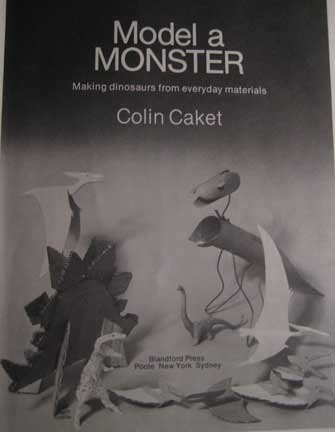
Colin Caket's Model a Monster, first published by the Blandford Press in Dorset, England in 1986, is one of my childhood favorites. This copy still has some paper mache stains in it from my failed attempts at creating the adorable models in the book. I was enthralled by all the cool art projects inside, and I'm sure this book saved many a kid during science fair season. This otherwise innocuous book about making dinosaur-centric art also takes a turn for the very, very unexpectedly weird towards the end, but we'll get to that later.
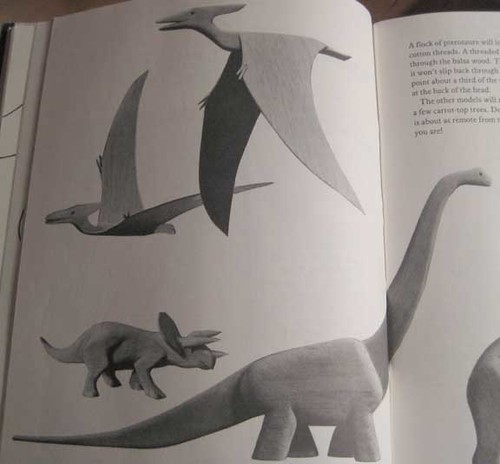
The "stars" of the book are these beautiful little balsa wood carved models. I wanted to make these so bad as a child. Heck, I still do.
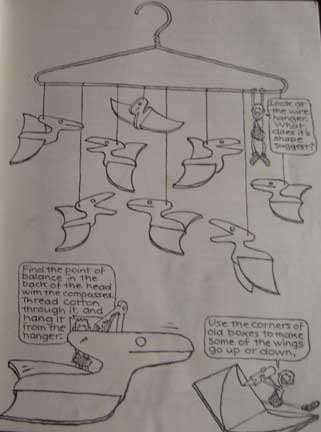
Here's a simple way to recreate the super-cute Pterosaurs and cherry scene in "The Land Before Time" with some recycled shoe boxes.
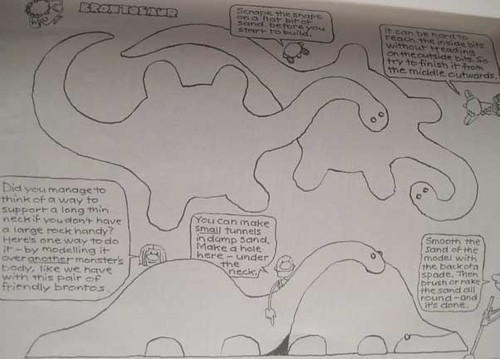
And why build a snowman or sand castle when you could bring sauropod love to the beach or backyard? And speaking of sculpting things out of snow... sort of:
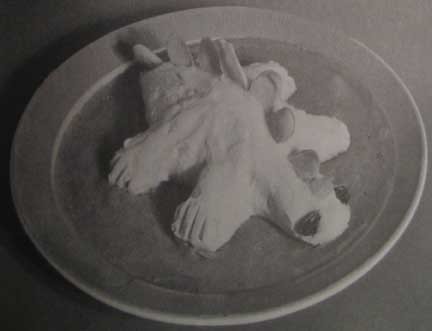
A stegosaurus ice cream sundae! God, that's cute! And this is basically what the book does up until around page 150, which is where things get weird. Really weird. Like, "where did I read that creepy thing as a child that still haunts my mind well into adulthood?" weird. That kind of weird. We will look at that weird part in the next post. Until then, here is some foreshadowing from page 29:
----
Announcement: This Saturday is the first MA Independent Comic Expo, going by the adorable acronym, M.I.C.E.! I'd love to be able to go, but unfortunately will be away that day. Although I should be coming back with lots of sketches...
Also, my good friends over at Art Evolved have started a cancer research charity called The Pink Dinosaur Project. Please support us!
----
Sketch of the day!
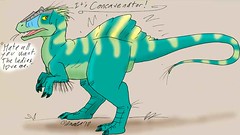
It's Balaur bondoc!
I like this idea but should try again with a much less wonky composition. That tail...
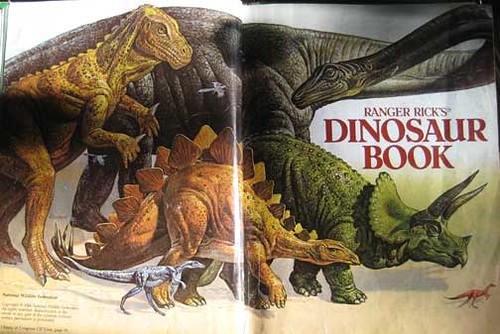
A treasure trove of retro-paleoart recent and otherwise, I have seen a lot of love online for Ranger Rick's Dinosaur Book (copyright 1984 National Wildlife Federation). While it never really gets as strange as Dinosaurs Discovered or the Rourke books, it's still pretty typical of dinosaur books from that time period. This one sports a wide variety of illustrators including Mark Hallett, Eleanor M. Kish, Rudolph Zalinger, and the legendary Charles R. Knight.
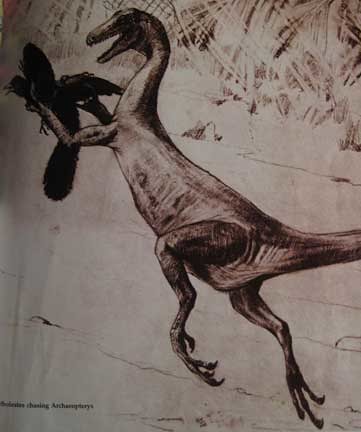
In case you ever doubt the impact of paleoart, think of Charles R. Knight. This drawing is one of his. Crack open an older dinosaur book and you will see this as the "default" action pose for small theropods.
In this John Dawson painting, we see an older theory about hadrosaurs that seems to (if you'll pardon the pun) no longer hold much water. They were supposed to be able to use their tails as a weapon. Exactly how this would work, what with their tails being held rather rigid by ossified tendons, I do not know.
Anyway, here are some hadros with unusually creepy eyes by Biruta Akerbergs. I have a feeling they may have been inspired by this guy...
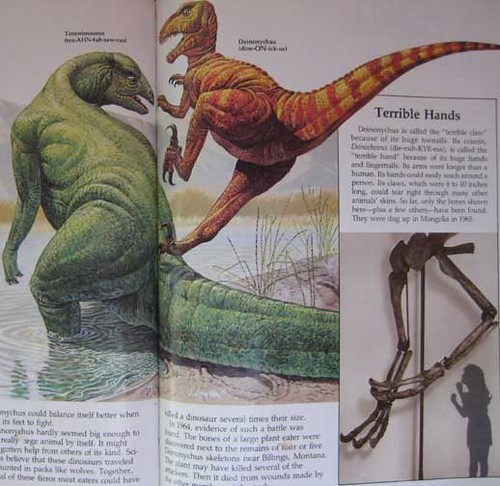
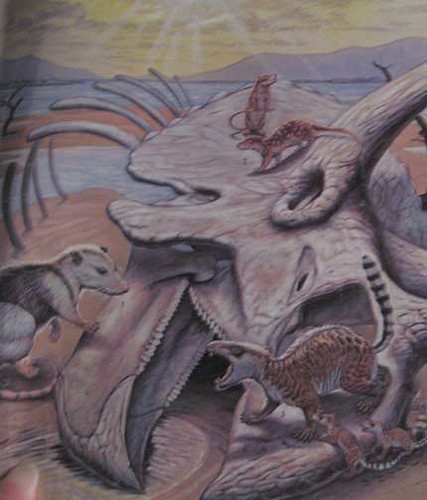
It wouldn't be an Old Dinosaur Book review if I didn't have a Kissguanodon or a HMNH McJurassicPark Raptor, now would it? This John Dawson painting should fulfill one of those requirements at least. Love the "Aw crap" look on the Tenontosaur. And note the big Deinocheirus arms. I did a comic a while back about those arms and noted that I had a picture just like this lodged in my subconscious forever. Now I have some proof of it! Now, the problem with dinosaur books for kids is that they inevitably end on the mother of all colossal downers (mostly because older dinosaur books don't care about birds). There's really nothing I can add to this old Mark Hallett painting except that I hated it as a child and I strongly dislike it now:
I... wow. Of course, now I know why this painting bugs me: mammals galore, but where the hell are all the birds?
----
A few weeks ago, this slice of crazy popped up in glorious "filmed in the dark with a shaky phone camera" vision. It has just recently been posted in "I can actually see the images onscreen" vision, and because every other "Pokemon" player has posted it, I guess I have to too. Even though this version of Pikachu and Meowth are going to haunt our dreams.
---- Announcement: So help me. I missed out on Talk Like a Pirate Day. But I'll be damned if I forget to tell you that today is Hobbit Day. Crank this tune while you read this. And remember kids, {enter obligatory snarky pipeweed joke here}!
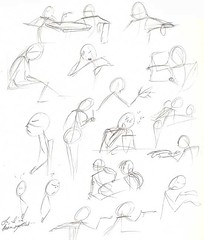
---- Art of the Day! Gestural figure sketches from a coffee shop.
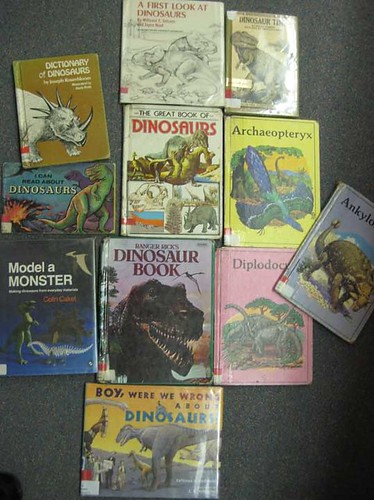
Few things are as much fun as visiting a relatively remote branch of your city library that you have not visited since childhood, and finding out that they haven't done much "weeding" since you were last there:
Oh, I had the hardest time leaving some of these. (LOL at the book at the bottom.) I've noticed there are a few blogs and other websites that have written about vintage paleoart lately. Love in the Time of Chasmosaurs often has a post about vintage dinosaur art, and has a corresponding Flickr group. Tetrapod Zoology occasionally has a neat feature about this subject as well. I stumbled upon a real treasure trove here, so I am going to have to throw my hat into the ring. Don't know if September will end up being Hilariously Outdated Paleoart Month, but anyway...
We'll start with one of the Rourke Prehistoric Animal Books. They were a library of books published circa 1984 by Rourke Enterprises, Inc. in Vero Beach, Florida. Each one focused on a different species. Usually they told of a day in the animal's life, from that animal's point of view. They were a staple of every 80's library for a long time.
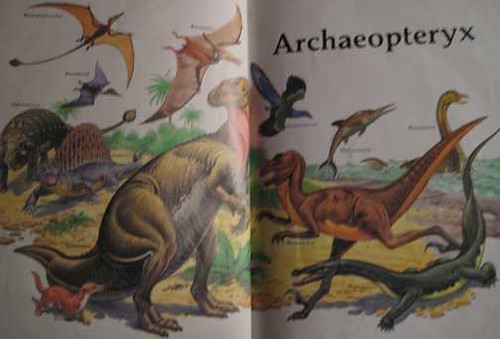
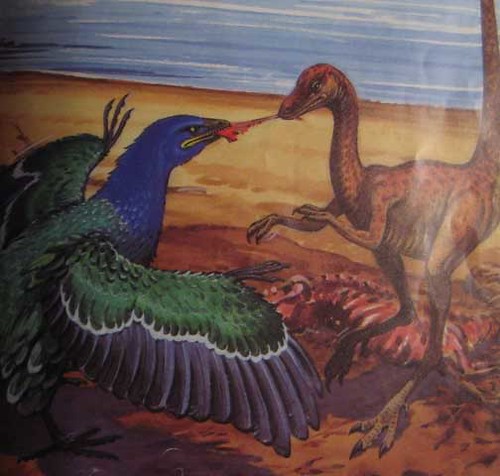
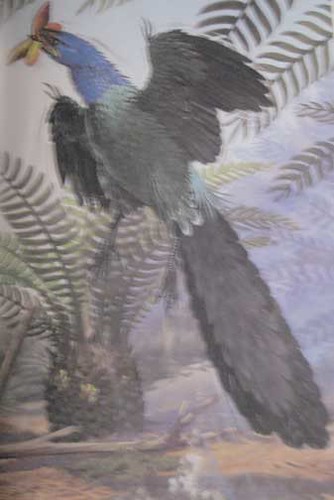
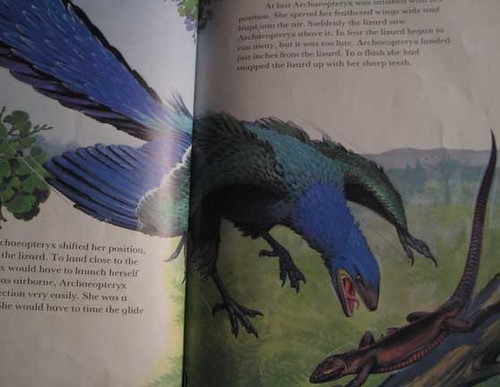
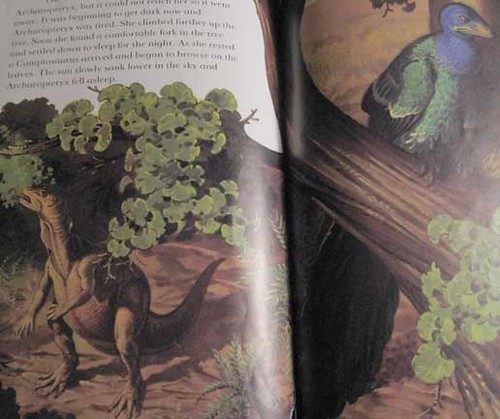
Here's the title page, listing all the books from this series (there were several series within the series). I picked Archaeopteryx (sic) because I figured it would have the most comedic potential. I love the irony of that HMNH/"Jurassic Park"-style Deinonychus running beneath our heroine... (Also notable: That ain't no Ankylosaurus.) I am also kind of in love with this picture from later in the book:
Yeah... not much I can add to this.Archeopteryx is depicted with pretty wonky hand and leg anatomy throughout the book, so get used to it. Also, she has that classic "lizardbird" head and face that has only fallen out of favor in paleoart very recently. And, of course, being the only animal in the world with feathers at the time, Archy has to be the only animal allowed to be colorful too.
Over at DeviantArt, Chasmosaur immediately dubbed my "too far in the opposite direction" feathered dinosaur in "PSA Addendum" a "Sparkleraptor". And I had a good laugh over that -- and then I looked at old illustrations of Archeopteryx and realized that this is not a new thing. Almost across the board all the "nekkid" dinosaurs are the lovely shades of Crap Brown, Diarrhea Green, Intestinal Distress Puce -- while Archeopteryx looks like she wandered off the set of "Priscilla, Queen of the Desert". (By the way, if you do not know what a "sparkle-animal" is... you're probably better off.)
Remember how Dinosaurs Discovered included a weird stegosaurus with horizontal plates along with more traditional-looking stegosaurs? This book has it's cake and eats it in a similar way. Here's where it stands on the infamous "Ground Up"/"Trees Down" issue:
Not much I can add to this either. There's a brief section in the back of the book explaining some of the stuff in the main part, and they state that they wanted to show both theories. (For those of you who aren't Ornithologists, there is a lot of wank over whether the first birds started flying by wing-assisted leaping from the ground, or by aiming for the ground and missing. This is all operating under the assumption that "probably a combination of both, it depends on the particular early bird" is not an option.)
The authors also state with assertion that Archy "is really a reptile that is halfway through evolving into a bird".
I... I...
(For the non-Ornithologists, I can think of at least three or four things wrong with that old chestnut that pops up in so many dinosaur books at the time. For one thing, evolution does not work like in "Pokemon". For another, if Archeopteryx is a reptile, you and I might as well be classified as reptiles. And so on...)
The book ends with Archeopteryx actually looking more like a viable animal in her own right rather than a horrible freakish lizard-thing trapped between evolutionary levels. And she gets the company of another Kiss-guanodon too!
-----
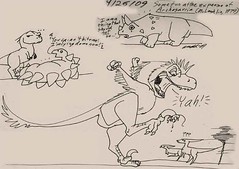
Art of the Day! Here are some reptiles that have achieved their final evolutionary forms! (Yup. that's another thing I couldn't type without cringing.)
Well first off, Guess who's exhibiting this weekend at ArtsFest? Sadly, I will not be able to attend in person, but if you're in the area and you want to own the original painting, "Support the Gulf", go check it out.
Second off (?), I really ought to wait until we get better art than this crappy little screenshot, but after five generations we finally have an honest-to-Arceus "Raptor Pokemon".
On to the topic. You may, if you like, consider this to be an addendum to Don Bluth Month.
When I was but a lass, I had read a few books about animation, it's history, and how it is produced. I had read Leonard Maltin and Jerry Beck's standard-bearing Of Mice and Magic, Charles Solomon's lavishly illustrated (and enormous) Enchanted Drawings, and the dueling studio histories, Disney's Art of Animation and That's All Folks! These are all wonderful books, but none of them really take you into the trenches -- or drafting tables rather. None of them really tell you the history of animation from the animators' point of view.
I was in my undergrad college library when this weird little book caught my eye:
That's really not the best cover art in the world, is it? But look at that list of contributors! How to Create Animation is a one-of-a-kind book, because it it made up almost entirely of interviews with animation artists.
Co-author John Cawley has been kind enough to post these interviews on his website, which is excellent of him, as some of the history revealed in this book is indispensable. (Note that not every interview from the book is posted online. You will have to dig up a hard copy for Bob Clampett, Jack Hannah, Chuck Jones, and Bill Scott. Also, the online version has no illustrations.) Some of the advice is very good too -- but the world of animation is very different from the way it was in 1990, when the book was published.
So that means, in this book,Glen Keane is JUST starting to design the character of Beast from "Beauty and the Beast" and is just starting to kick around ideas for "Aladdin". Most of the animators from Disney are JUST getting over the hangover they woke up with after "Roger Rabbit" and "Little Mermaid". The future couldn't be brighter for Sullivan/Bluth Studio, and television animation, especially on Saturday mornings, is unstoppable.
Suffice it to say, there are a few Funny Aneurysms in this book. The very worst might be Chris Buck talking enthusiastically about the new series he is working on based off Brad Bird's "Amazing Stories" short, "Family Dog". (For those not in the know, "Family Dog" was, prior to "Father of the Pride", the single most epic failure in the world of prime-time television animation. Hardly remember either of these? Exactly.)
It's always fun to read the history of a medium right from the mouths of the people who lived it. Some highlights from the book, including revelations that surprised me:
* I've never met anyone who didn't like "Who Framed Roger Rabbit". Yet almost all of the artists who worked on it cannot stand the movie! It's either because they thought Roger himself was annoying or because the movie was so hard to work on -- the book reveals that the film was in development limbo since 1983 at least. But what's also strange is the fact that a few artists who did not work on "Roger Rabbit" dislike it too, either because of Roger himself being annoying or because it "doesn't respect animation history" (what?) Especially odd, because this is probably THE movie that kick-started the new appreciation of classic animated shorts.
* On that note, if animators who started work in the 70's have a Purgatory, Filmation is it. EVERYONE seems to have started out there. I guess you have to start somewhere, but yikes!
* It's often the unsung heroes and artists I never heard of who have the best stories in this book. Consider freelance animator Mark Kausler, who has probably got the most interesting resume imaginable, having worked at almost every studio. Or, Bob Givens, who started out working on "Snow White" and, by the time this book was written, wound up on... "Garfield and Friends"...
* If nothing else, this book proves that NOBODY saw the CGI revolution coming. Pixar gets one offhand mention in the introduction as a small studio that makes interesting little shorts and commercials and such.
But even with this last reveal in mind, the animators still have one indisputable piece of advice that they all agree upon: You need to learn how to draw. There's no getting around that. Take some life drawing classes, go outside and sketch, train your eyes to see.
All in all, this is a fascinating book and I wish the authors would consider creating an updated version. My only real complaint: boy do I wish one woman, at all, had been interviewed.
----
So I just caught up on some podcasts and guess who got a mention towards the end of this episode of the lovely "Science... Sort-Of"?